2026 Mayoral Candidate Focus
Dr T
Can this doctor prescribe a new future for Johannesburg?
Dr Tlaleng Mofokeng arrives at the 2026 mayoral race with a UN mandate, a medical degree, and a city full of symptoms. Johannesburg will not ask who she is. It will ask what she can do.
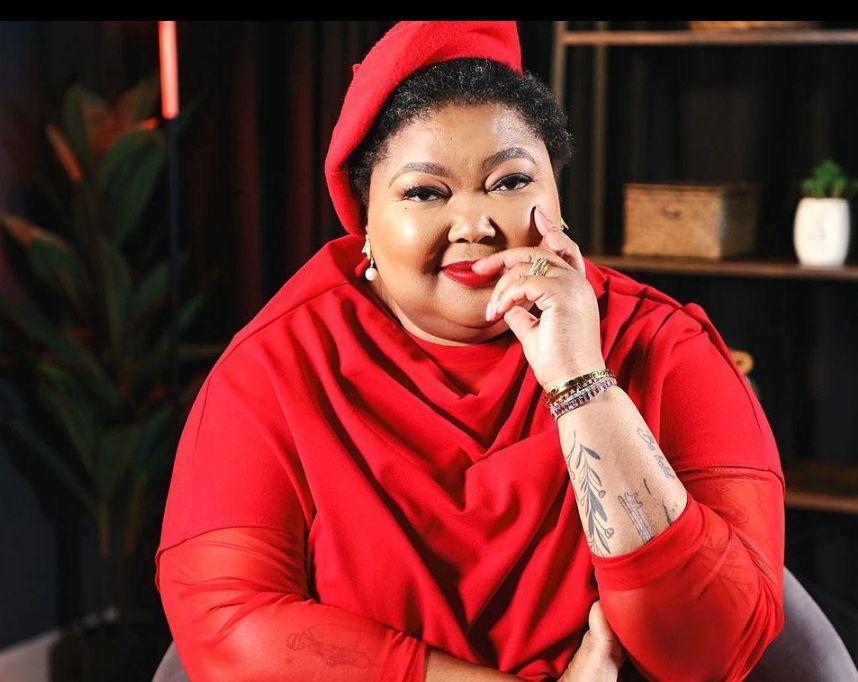
Johannesburg is flirting with politics again.
After years of political fatigue, broken promises and residents quietly switching off from party politics, something feels different about the 2026 mayoral race.
There is a new energy in the room.
Younger faces. Bigger personalities. Sharper voices. Candidates who seem less interested in simply inheriting Johannesburg’s problems and more willing to tell the city what they believe should come next.
And somewhere in the middle of this political reshuffling stands a woman with an unusual route to City Hall.
Dr Tlaleng Mofokeng.
Before politics, there was medicine. Before the campaign trail, there was public health. Before the Johannesburg mayoral race, there was an international stage — six years as the United Nations Special Rapporteur on the right of everyone to the highest attainable standard of physical and mental health. She was the first woman, and the first African, to hold the post.
Now the doctor is stepping into a different kind of consultation room.
Johannesburg.
And this patient has a long list of symptoms: unreliable services, collapsing infrastructure, housing shortages, unemployment, crime, a municipal finances problem that has become a civic personality trait, and residents increasingly demanding the one thing politicians have struggled to deliver with any consistency — results.
Now the doctor is stepping into a different kind of consultation room. Johannesburg.
From QwaQwa to Charlotte Maxeke
The story does not begin in Braamfontein, or in Geneva. It begins in QwaQwa, in the old Bantustan hills of the Free State, where a Catholic child on school holiday preferred counting pills for the elderly to walking the stations of the cross.
Ten-year-old Tlaleng wanted to be a doctor. She became one: MBChB from the Nelson R. Mandela School of Medicine at the University of KwaZulu-Natal, class of 2007. Then the work that actually makes a physician — paediatrics at Charlotte Maxeke Johannesburg Academic Hospital, the West Rand clinics, the long years of HIV care, reproductive health, youth services, and the unglamorous labour of a public system that asks too much of too few.
Johannesburg is not a city she discovered on a manifesto. She has lived here for eighteen years. She has worked its wards. She has written a bestselling book, Dr T: A Guide to Sexual Health and Pleasure, that treated South African sexual health as a matter of dignity rather than embarrassment. She sat on the Commission for Gender Equality. She briefed the world on the right to health while Covid was still rewriting the rules. The BBC named her among its 100 Women in 2021.
Then, in July 2026, Julius Malema stood in Thohoyandou and named her the Economic Freedom Fighters’ candidate for mayor of Johannesburg.
The doctor was coming home. She has been careful to say it is not a demotion.
The consultation room
A city is not a patient, and a mayor is not a clinician. That is the first honest sentence in this race, and Mofokeng knows it. What she is offering instead is a method: diagnose, then treat. Do not manage the fever and call it a cure.
Her public prescription is unusually specific for a campaign still finding its voice.
- 01
Expand comprehensive primary healthcare — 24-hour clinics, maternal and obstetric units, and a digital patient system that does not punish a worker for seeking care on a lunch break far from home.
- 02
Write off historical debt for indigent households, with a rehabilitation path so the arrears do not simply grow back.
- 03
Insource municipal workers: permanent jobs, medical aid, sick leave — on the argument that a city which outsources its own hands cannot be surprised when it loses its grip.
- 04
A one-stop shop in which a SASSA grant already accounts for water and electricity, instead of sending the poorest residents into a maze of billing, cut-offs and queues.
- 05
A maintenance blitz on water and power, built on partnerships, because the capital budget will not, by itself, resurrect a city this size.
- 06
An outright majority. Fifty-one percent. No more of the coalition carousel that has made Johannesburg’s executive a revolving door.
Whether a party that won just over ten percent of the Joburg vote in 2021 can talk itself into a majority in 2026 is a mathematical question dressed as a moral one. The EFF currently holds 29 seats in council. The city’s operating budget runs past R97 billion. Ambition is not a crime in a campaign. Arithmetic is not a suggestion.
Can the language of human rights become the language of budgets, pipes, power stations, roads and refuse collection?
The field
She is not running against a vacuum. The Democratic Alliance has put Helen Zille on the paper. ActionSA has returned Herman Mashaba to the argument. Rise Mzansi has Lukhona Mnguni; the Land Party, Ntsiki Mazwai; BOSA, Nobuntu Hlazo-Webster; the Patriotic Alliance, Kenny Kunene. The IFP has named Mlungisi Mabaso. The ANC, for a stretch of this race, left the city guessing.
It is an unorthodox field — musicians, analysts, a former mayor, a former premier, a physician. That is part of why the city is paying attention. Johannesburg has been governed, in recent years, like a building whose lifts work on alternate Tuesdays. Novelty is not a programme. But novelty is how a tired electorate looks up.
The questions Johannesburg will actually ask
Mofokeng brings intelligence, professional experience and a distinctly different political biography to the race.
But Johannesburg will not simply be asking who she is. It will ask what she can do.
Can a doctor accustomed to diagnosing problems help diagnose — and perhaps repair — one of Africa’s most complex cities?
Can the language of human rights become the language of budgets, pipes, power stations, roads and refuse collection?
Can a candidate who has never run a municipality, never sat in a mayoral committee, never had to make a Friday afternoon call about a burst main in Soweto and a collapsed transformer in Sandton in the same hour, learn the job at the speed the city requires?
Those are not insults. They are the job description.
There are other questions, and they belong in the same paragraph. She is standing for a party with a national brand as combustible as it is loyal. Coalition politics, which she hopes to escape, may yet be the water she has to swim in. In October 2025 the Health Professions Council of South Africa found her guilty of unprofessional conduct over language used on social media — a finding her party treated as politics by other means. Voters can decide whether that is a character issue, a footnote, or a distraction. A serious city will not pretend it did not happen, and it will not pretend it is the whole of the woman.
The larger wager is generational. A great many of Johannesburg’s young people have concluded that politics is a conversation held in a room they are not invited into. This election is crowded with candidates who look, speak and arrive differently. That is not automatically a renaissance. It is an opening.
The Dr T question
On the campaign trail she has said she is ready to serve twenty-four hours a day. She has asked Johannesburg’s own activists to “create Jozi with us,” which is either a slogan or a theory of government, depending on whether the taps run.
The city has heard promises before. It has heard them in every language, from every party, with every kind of credential. What it has not heard often enough is a plan that survives contact with a pothole.
So this is the Dr T question, stripped of the romance:
If Johannesburg is the patient, what is the treatment — and who holds the chart when the night shift begins?
This election, on 4 November, may give the city a chance to answer it.
But what do you think?